
Revolt Against British Rule
Objectives of the Movement
Protection of Tribal Land and Forest Rights
The movement sought to safeguard ancestral lands, forests, and natural resources that sustained tribal life for generations. These lands were not merely economic assets but sacred spaces tied to identity, culture, and survival. Protecting them meant preserving the foundation of tribal existence and resisting displacement.
Resistance Against British Exploitation
Tribal communities rose against unjust taxation, forced labor, land seizures, and oppressive colonial policies. The objective was to end exploitation that disrupted their self-sufficient way of life and restore dignity, freedom, and control over their own resources.
Preservation of Tribal Traditions and Autonomy
The movement emphasized protecting indigenous customs, governance systems, spiritual practices, and social structures from external interference. Maintaining autonomy ensured that tribal societies could continue living according to their ancestral values and cultural heritage.
Strengthening Unity Among Tribal Communities
A key goal was to unite different clans and villages under a shared cause. By fostering solidarity, cooperation, and collective resistance, the movement transformed scattered struggles into a powerful force capable of challenging colonial authority.
Role of Bhagoji Naik
Organized and Led Armed Tribal Resistance
Bhagoji Naik emerged as a determined leader who united tribal warriors and organized strategic resistance against colonial forces. Drawing upon deep knowledge of forests, terrain, and traditional warfare, he coordinated defensive and offensive actions that challenged the British presence in tribal lands.
Motivated Communities to Fight for Their Rights
Through powerful leadership and personal bravery, he inspired villagers, youth, and fellow warriors to stand against injustice. Bhagoji Naik transformed fear into courage, encouraging communities to reclaim their dignity, protect their homes, and defend their ancestral rights.
Challenged British Authority in Tribal Regions
His actions disrupted colonial control in remote areas, making it difficult for British administrators to enforce oppressive policies. By resisting taxation, interference, and land seizure, he asserted tribal sovereignty and demonstrated that indigenous communities would not submit to foreign domination.
Became a Symbol of Courage and Defiance
Beyond his military role, Bhagoji Naik became a lasting emblem of resistance and honor. His legacy continues to inspire generations as a reminder of the strength, resilience, and unity of tribal communities in the struggle for freedom and justice.
HISTORICAL IMPACT
A Spark That Ignited Tribal Resistance
Bhagoji Naik’s resistance did more than challenge colonial authority — it awakened a powerful spirit of unity among tribal communities. His fearless defiance inspired indigenous groups to defend their land, identity, and rights with renewed determination.
Though rooted in regional struggle, his movement became part of the broader current of resistance that shaped India’s freedom movement. His legacy remains a symbol of courage, dignity, and collective strength.
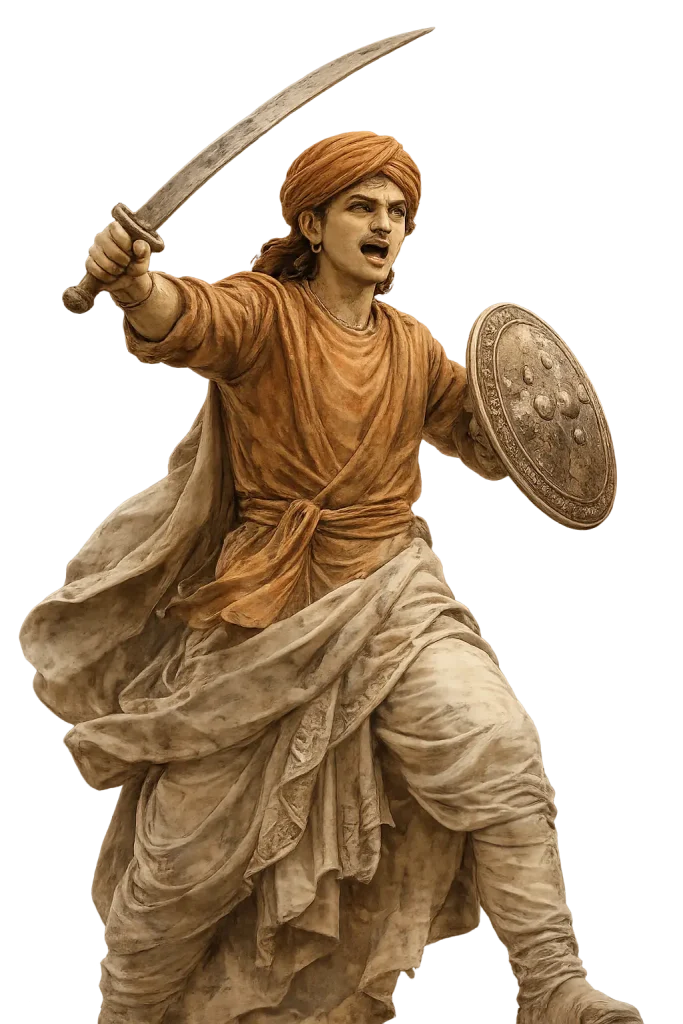
-What Was the Revolt?
Bhagoji Naik led tribal resistance movements against British authorities who imposed heavy taxes, controlled forest lands, and disrupted traditional tribal governance systems.
As British colonial administration expanded into tribal regions of Maharashtra, new revenue policies and forest laws severely restricted the traditional rights of indigenous communities. Forests that had sustained tribal livelihoods for generations were declared government property. Hunting, wood collection, and shifting cultivation were regulated or banned, directly affecting economic independence and cultural practices.